
Game Analysis
Buying Time in Resident Evil 4 Remake
How positioning, crowd control, and resource choices buy a little breathing room in the remake.
By Louis Chan 4 min read
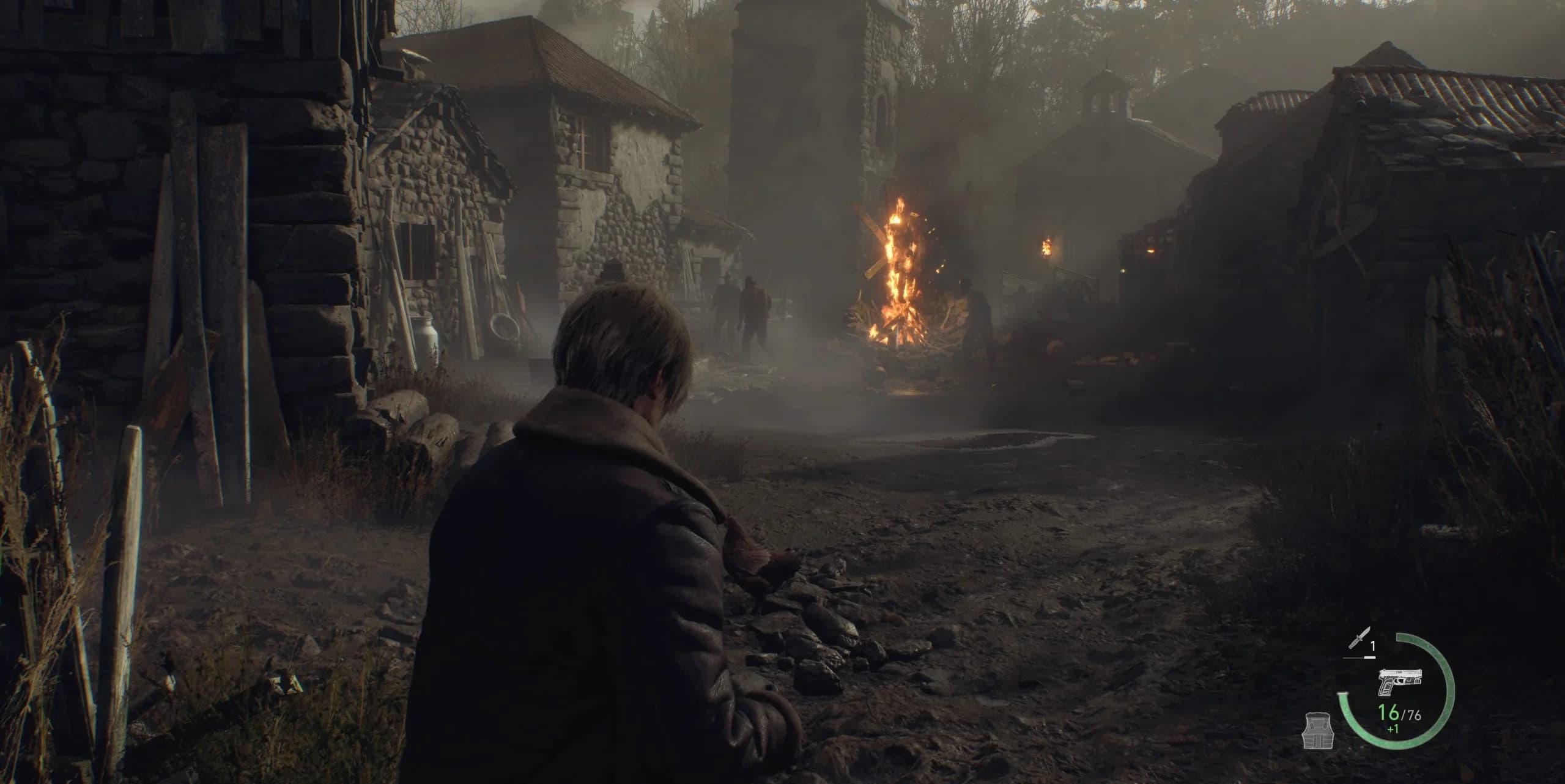
What I find interesting about Resident Evil 4 Remake is that having more ways to fight does not make the player feel safe for long. A doorway, a kick, or a well-timed parry can make a difficult situation manageable, but each only solves part of the problem.
The remake creates pressure by letting the player buy temporary control rather than permanent safety. The village fight, the house defense with Luis, and the time between encounters show how combat and resource management support each other.
01 / A good position has an expiry date
The opening village fight gives the player several places to go, but none removes the need to pay attention. In the square, Leon has room to move around enemies. The problem is that Ganados can approach from different directions, including outside the camera view.
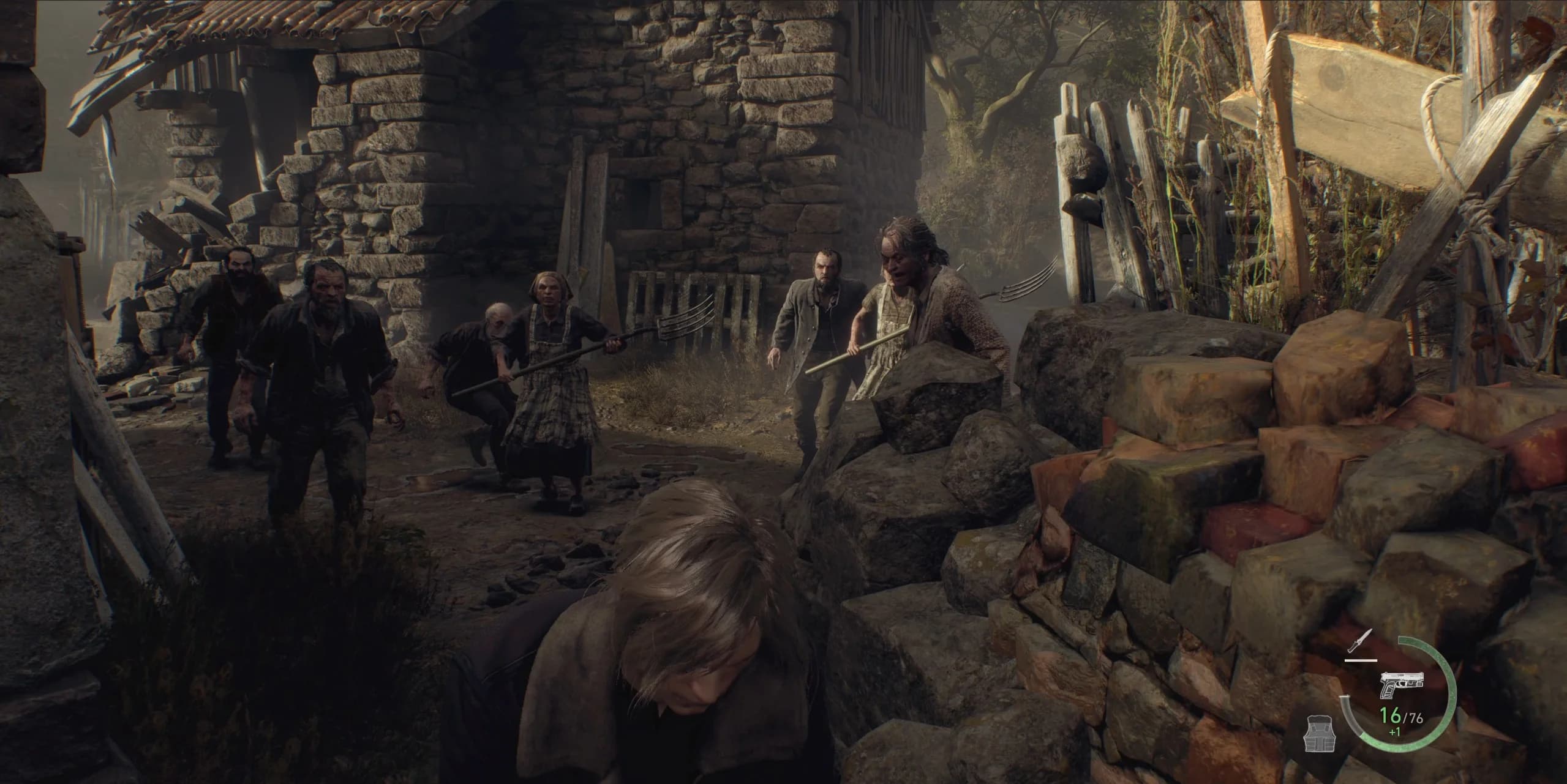
The shotgun house offers a different tradeoff. Its doorway makes enemies easier to track, and the W-870 shotgun upstairs gives the player another way to handle a crowd. However, enemies can enter through the building and its windows. Staying inside eventually becomes its own problem.
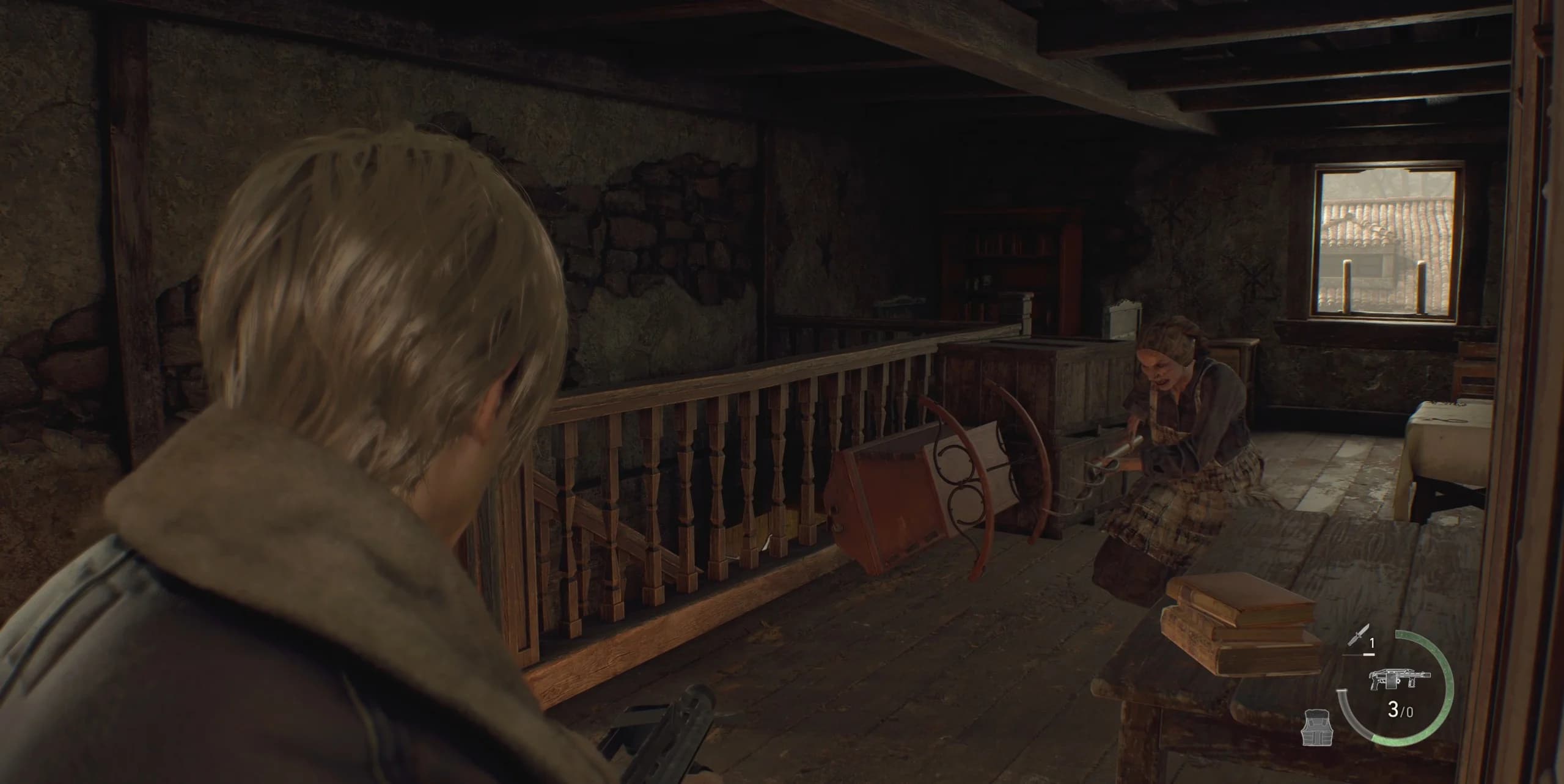
The stairs, upstairs window, and roof route matter because they give the player somewhere to go when the position stops working. Moving away is part of using the house well. The square and house offer different ways to manage attention and escape space.
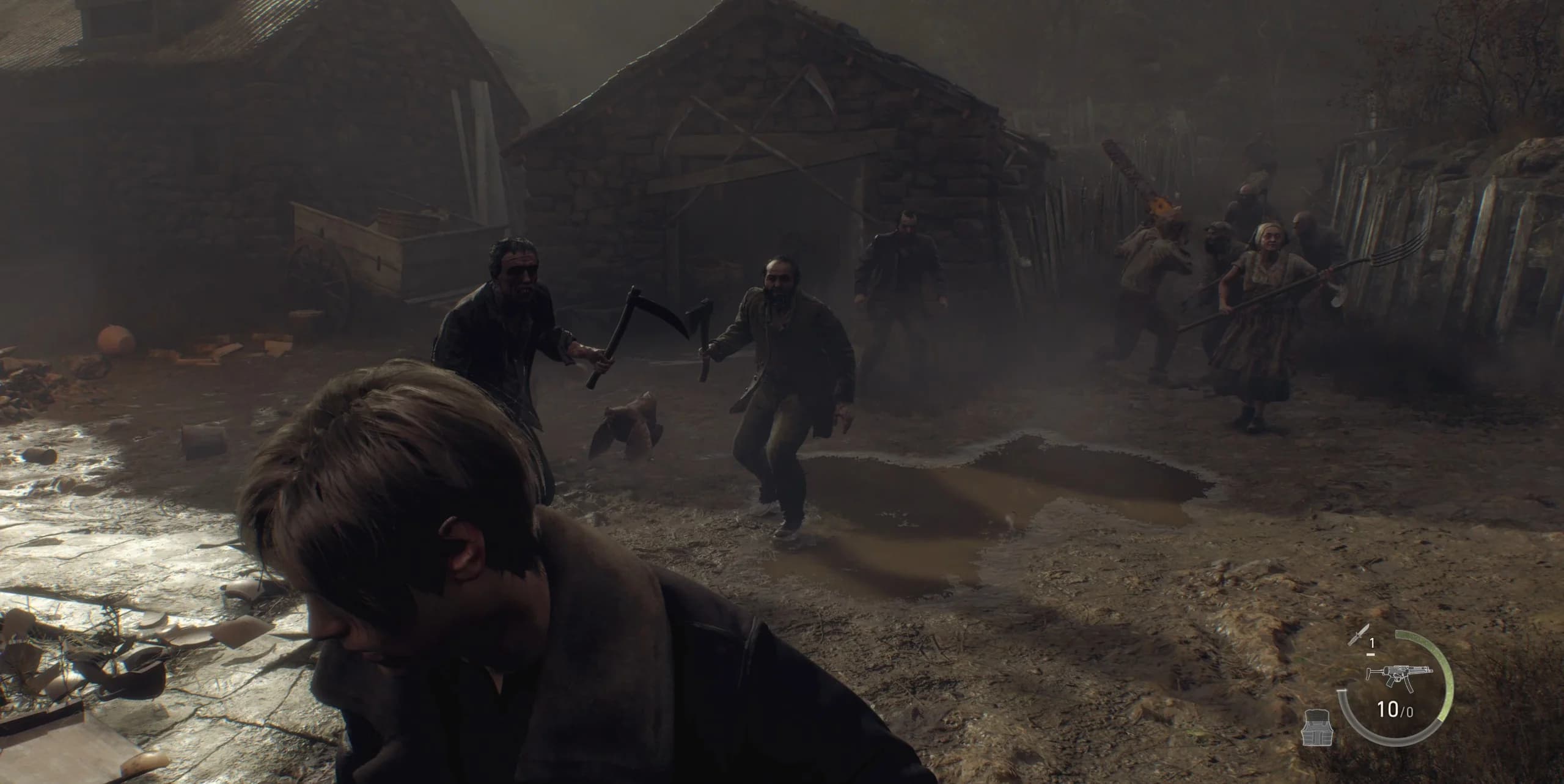
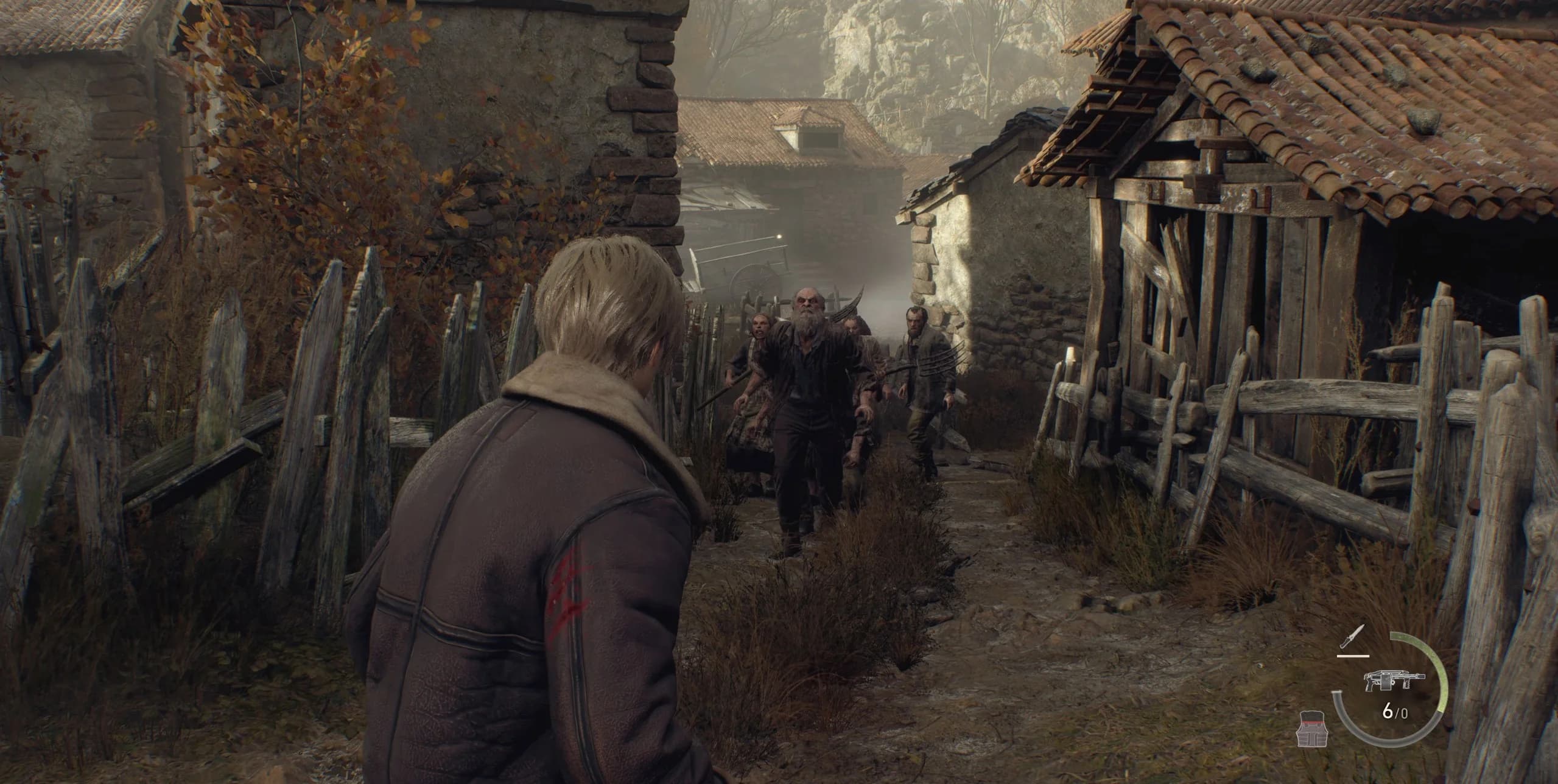
I think this is what makes the village useful as an early encounter: it encourages planning, then asks the player to change that plan. The next route needs to be readable under pressure.
02 / Combat changes the shape of the crowd
A shot does more than remove health. Staggering a Ganado creates a melee opportunity, and a kick can also catch nearby enemies. That makes the arrangement of the crowd important: an opening on one enemy can help with several others, if Leon can reach it safely.
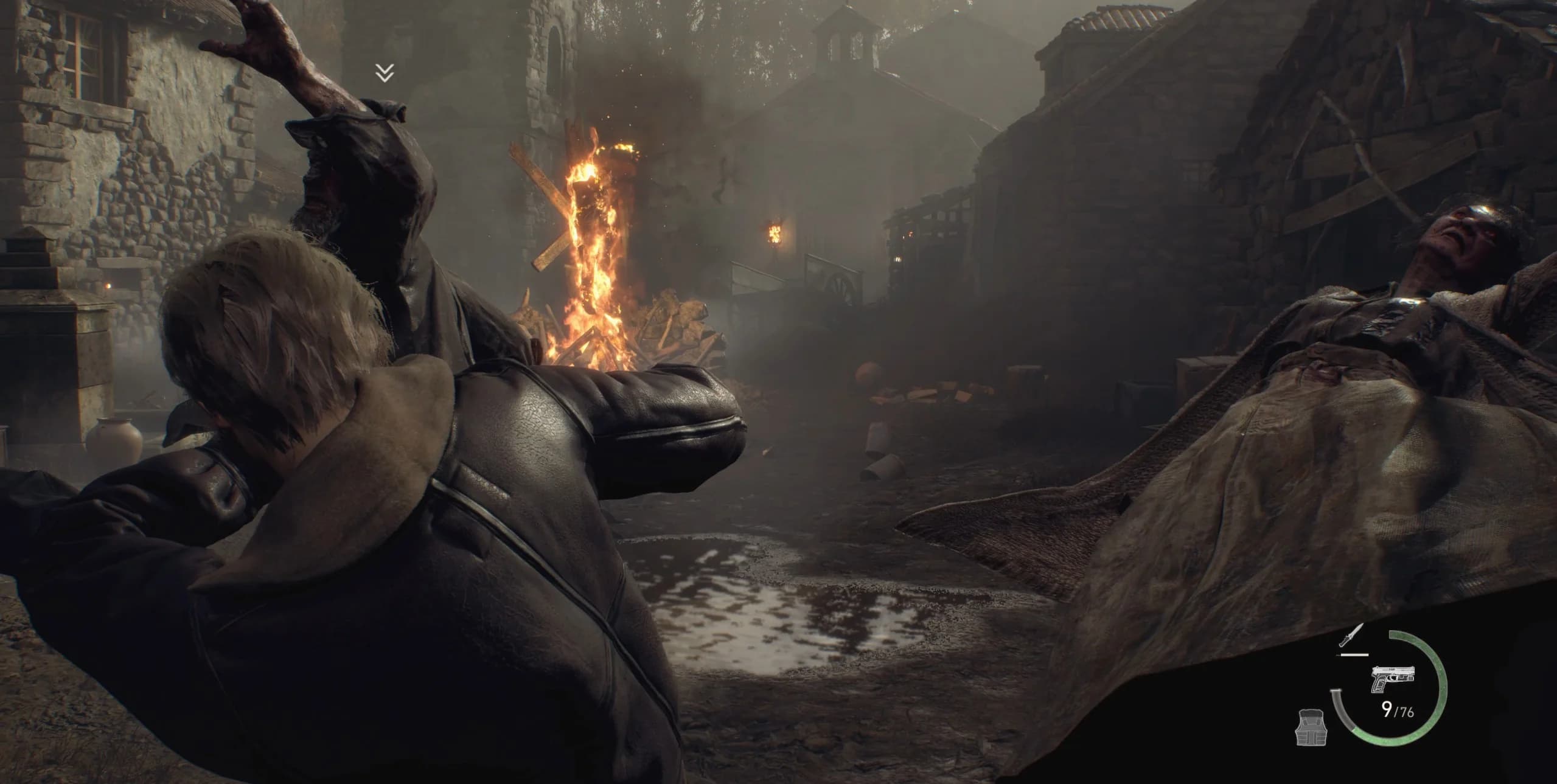
The space after a kick is useful for reloading, moving, or choosing another target. This changes ammunition efficiency. A shotgun shell that interrupts a close group may be worth spending even if it is an expensive way to kill one enemy.
The remake lets Leon move while aiming, but there is still a reason to slow down. A focused reticle improves stagger and critical-hit chances. Waiting for that better shot competes with the need to stop an enemy now.
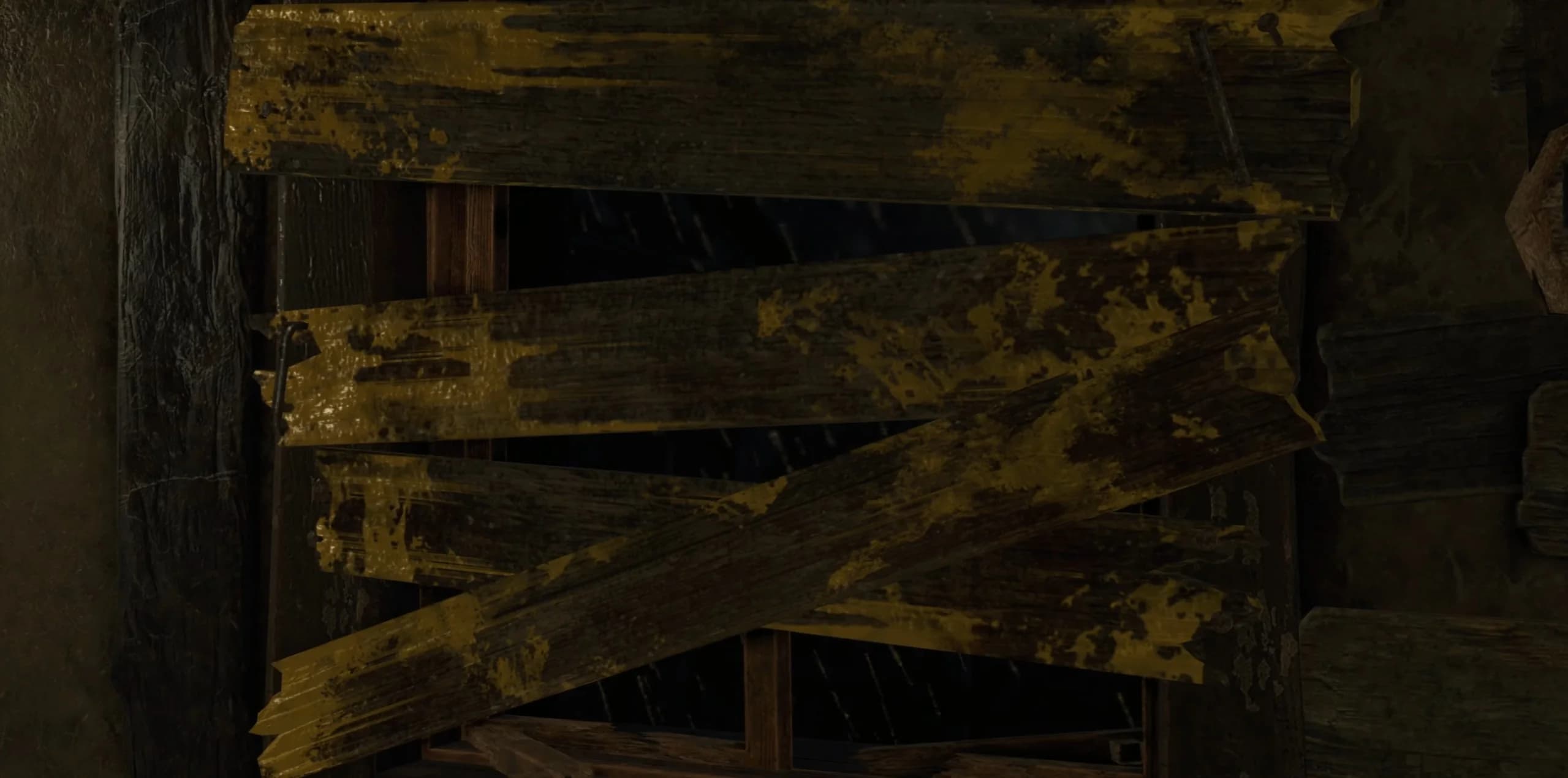
The Chapter 5 house defense with Luis takes this idea into the environment. Boarding a window or removing a ladder delays an approach, while other threats remain active. Upper-floor entries and the Brute add pressure without making the room physically smaller. Combat and level design are asking the same question: which part of the fight needs attention first?
03 / The knife puts a price on recovery
The knife gives Leon a way to respond when an eligible attack gets too close. A parry can prevent a hit without first creating distance. It is a useful chance to recover, but it consumes durability, leaving less protection for later.
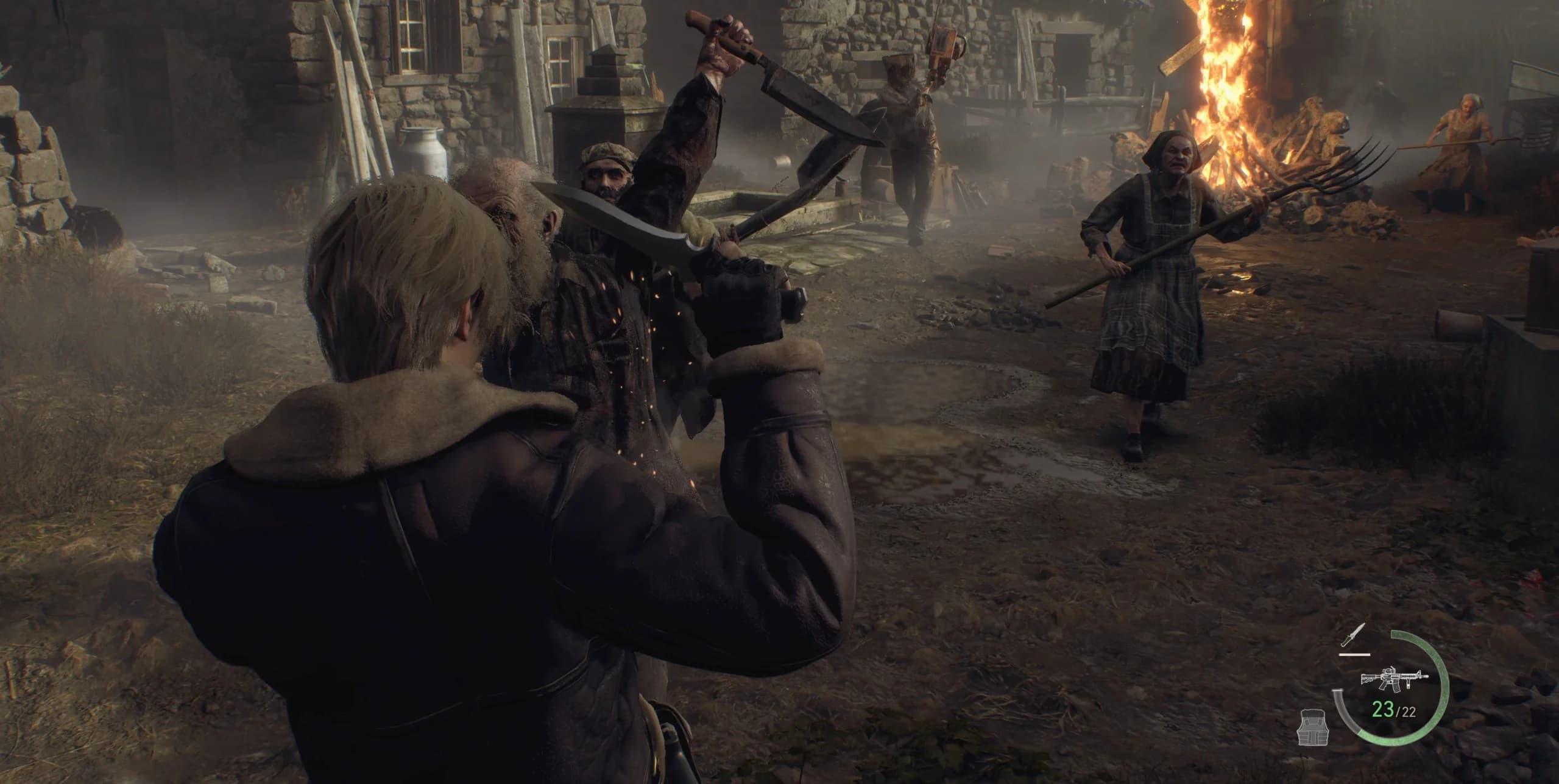
Stealth kills and knife follow-ups use that same durability. Spending it offensively can remove a threat before it costs ammunition or health; saving it keeps a defensive option available. Those choices compete with each other.
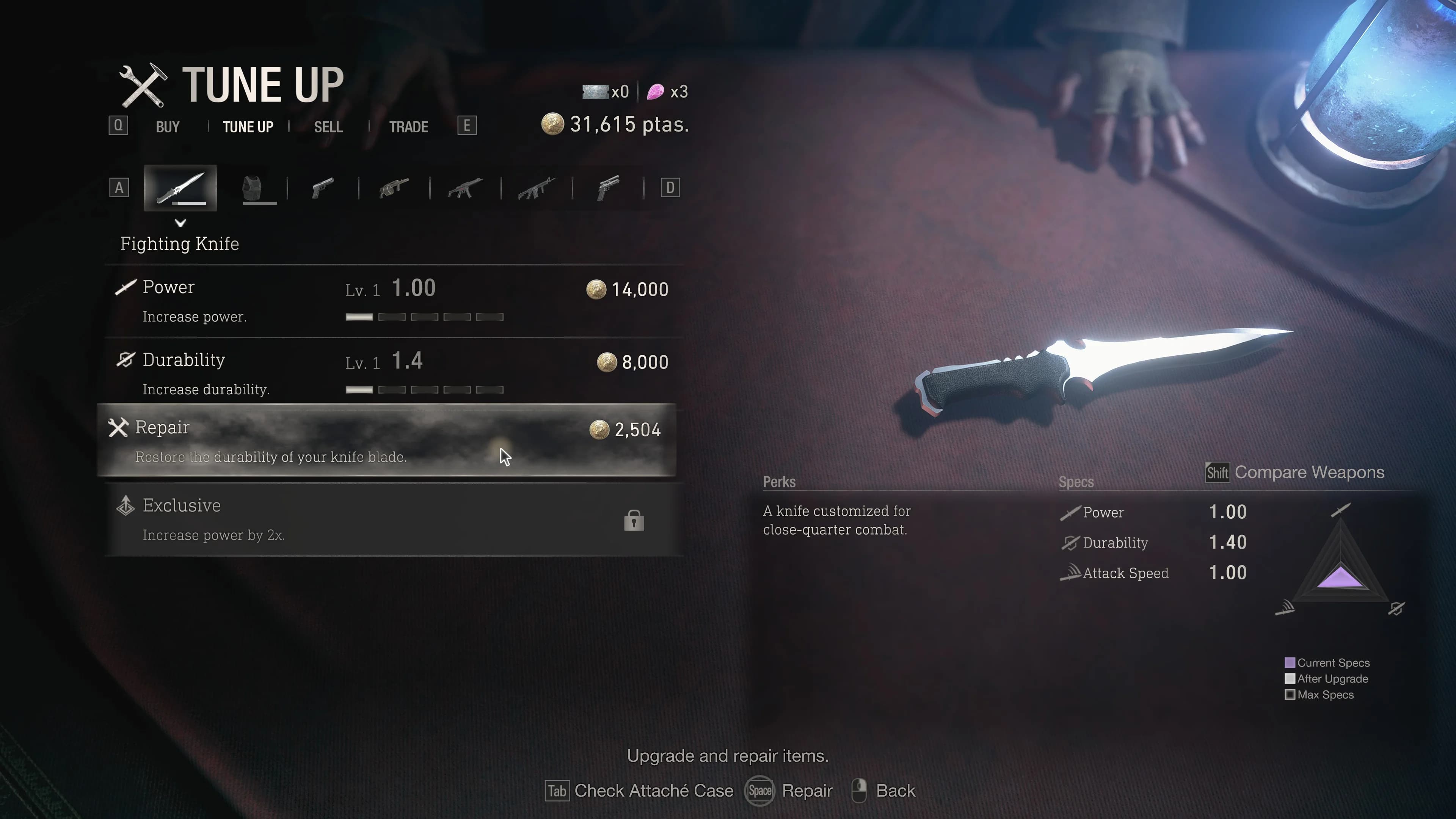
That cost continues at the Merchant, where repairing the Combat Knife uses pesetas that could go towards another purchase or upgrade. Surviving a close call can therefore affect preparation for the next encounter, even without losing health.
I like this connection between immediate recovery and longer-term planning. It needs clear durability feedback and other workable responses when the knife runs out. Parry timing also varies by difficulty, so the skill required is not identical in every playthrough.
04 / Relief turns survival into preparation
After the bell ends the opening fight, the village becomes a place to search. The same buildings that were escape routes now hold supplies and things the player may have missed. With no attackers demanding attention, there is also time to understand the space.
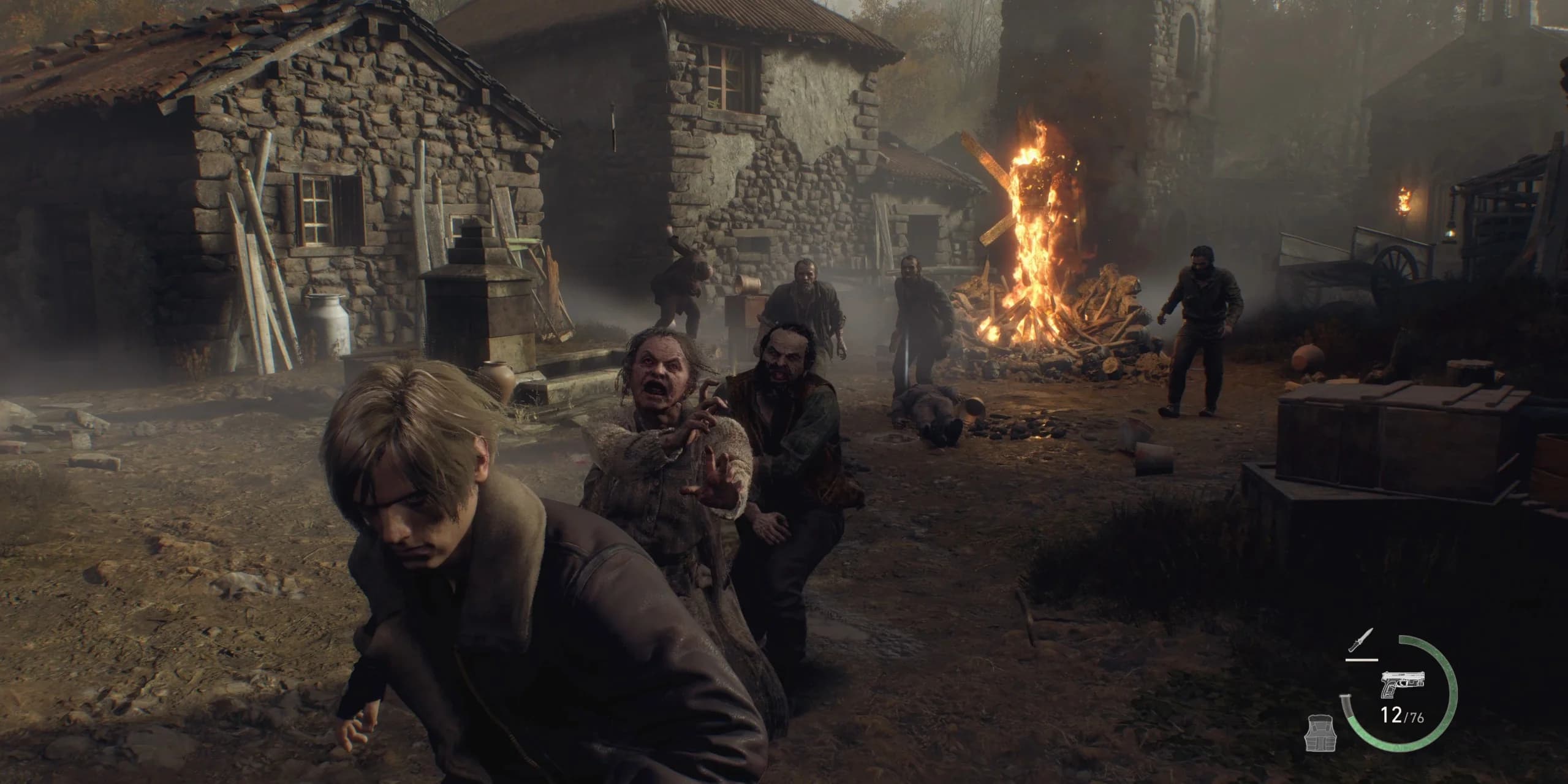
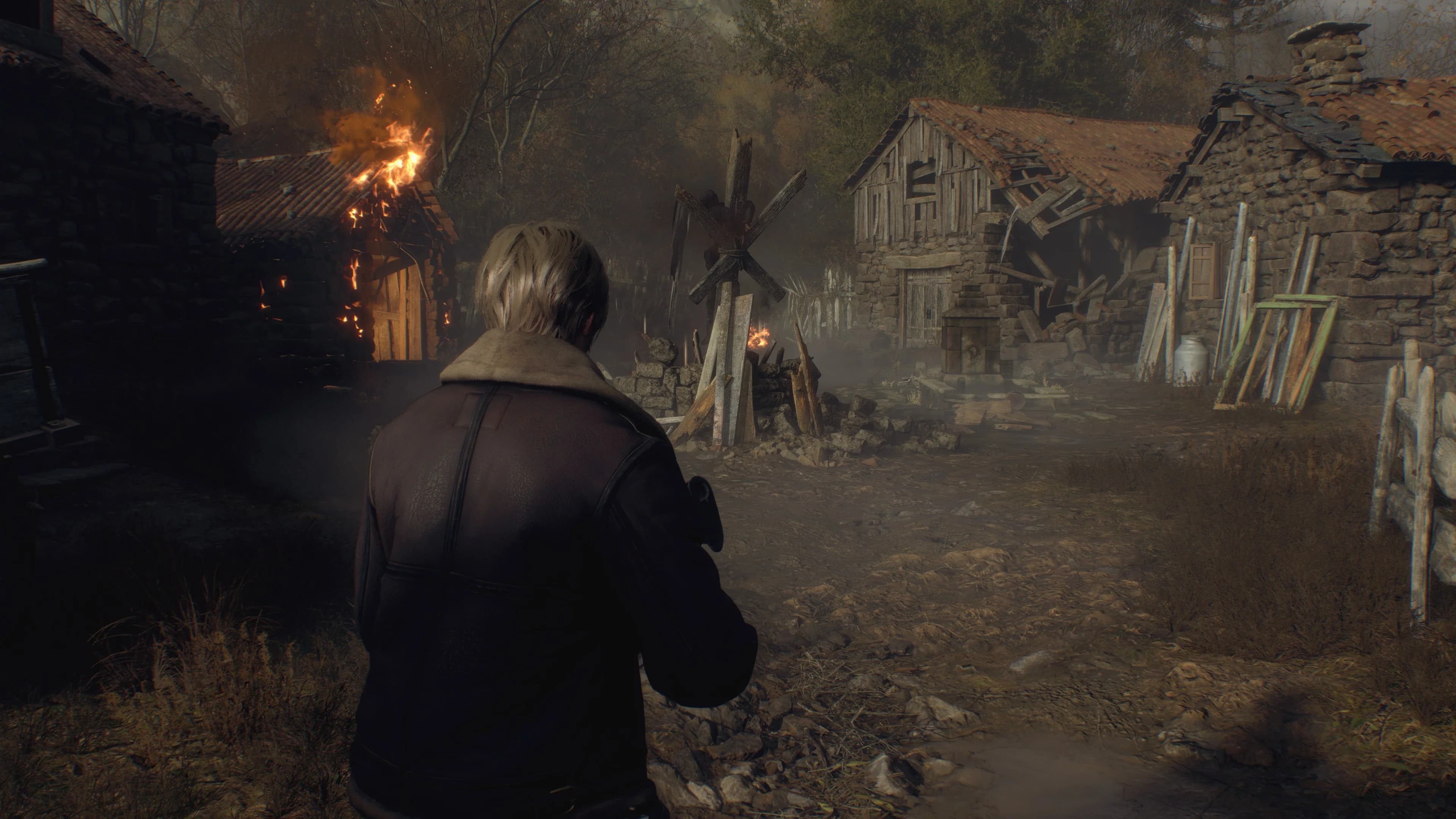
This is why relief matters beyond giving the player a rest. Searching changes what they carry, while revisiting the area helps explain where a position went wrong. There is time to learn from the fight.
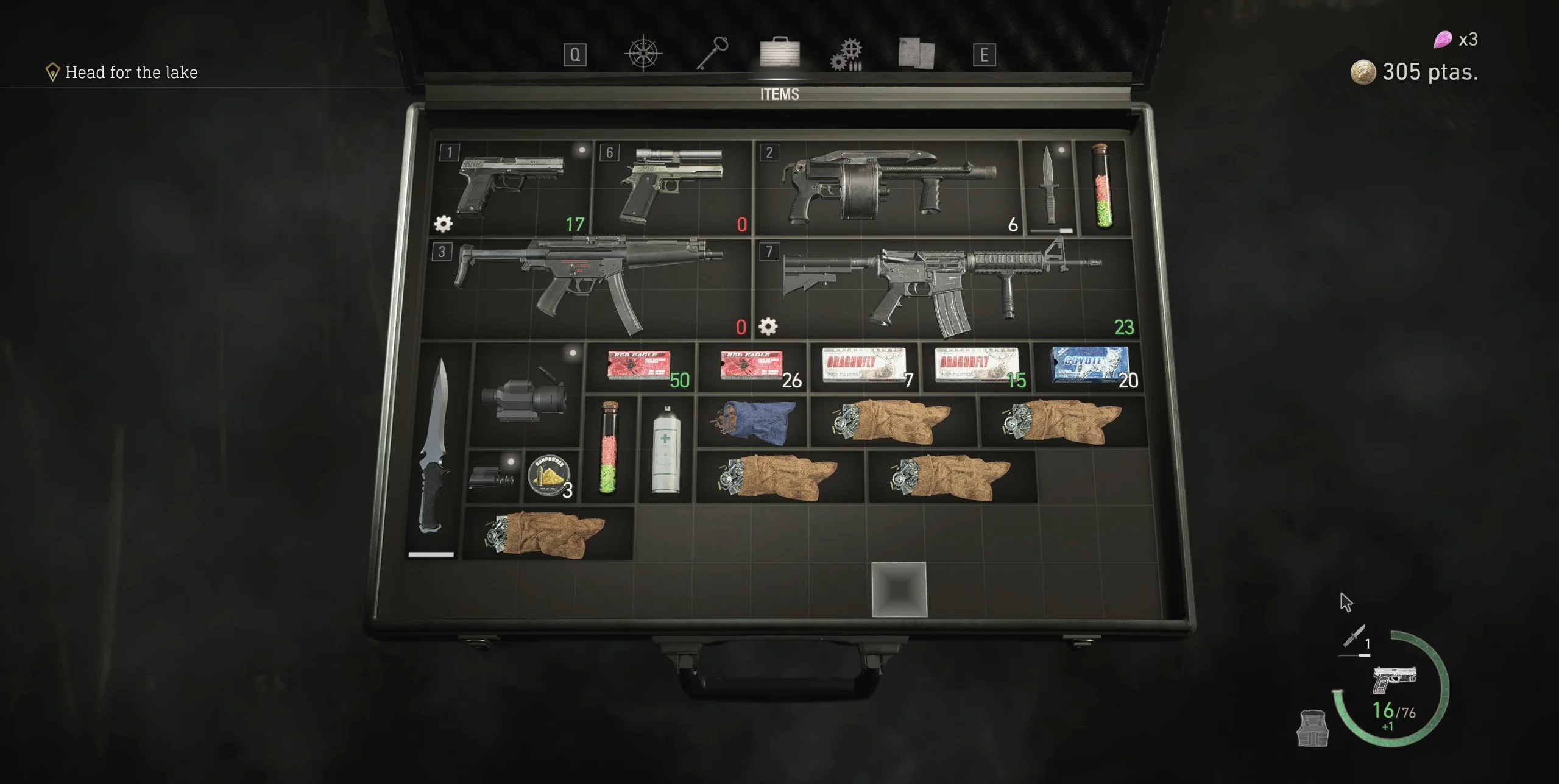
Crafting turns that breathing room into a choice. Gunpowder and Resources (S) are shared by handgun ammunition and shotgun shell recipes. Keeping materials preserves options; crafting commits them to a particular response. The attaché case shows those supplies, but fitting an item does not answer when to spend it.
The Merchant extends that planning through repairs, upgrades, and selling treasure. In my original RE4 analysis, I focused on how his appearance relieves tension. Here, I think the stronger connection is what the player takes back into danger: a repaired knife, different ammunition, or a weapon they chose to improve.
Design takeaways
- Design the loss of control. Make the next move readable when a position fails.
- Give tools a time value. A cleared route or a chance to reload can matter as much as damage.
- Price recovery without making it mandatory. Keep alternatives available when a defense runs out.
- Make relief change the next fight. Let exploration, crafting, and repairs carry survival into preparation.
Sources & credits
Mechanics and encounter details were checked against the sources below. Interpretations of player behavior and design tradeoffs are my analysis.
- Game Developer: The remake’s knife system
Secondary verification of Combat Knife repair at the Merchant using pesetas.
- Resident Evil 4 on Steam
2023 PC game identity, Capcom credits, and official hero screenshot.
- Capcom official manual: Player Actions
Focused reticle, melee, knife durability, and repair guidance. Button labels are platform-specific; this article does not use them as PC bindings.
- Capcom official manual: Crafting
Shared materials and ammunition recipes.
- Xbox Wire: Updated combat with producer Yoshiaki Hirabayashi
Primary interview on knife actions, movement while aiming, and difficulty-dependent parry timing.
- PowerPyx: Remake Chapter 1 walkthrough
Secondary cross-check for shotgun house routes and the post-bell transition.
- Push Square: Remake Chapter 5 walkthrough
Secondary cross-check for boarding windows, upper-floor ladders, and the Brute.